


Watch

What’s driving the uneven recovery at the core of California cities, and how is that impacting housing and investment?
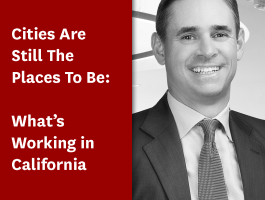
Sean Burton (Cityview) joins Richard K. Green (USC Lusk Center for Real Estate) discussing the forces and fundamentals reshaping urban markets. The conversation moves from post-pandemic population shifts and the surge in AI-driven demand to the regulatory dynamics influencing Southern California development.
Highlights include:
- Why San Francisco may be turning a corner, and whether an AI boom can sustain it.
- How concerns about regulatory risk have chilled investor sentiment in the City of Los Angeles.
- Where supply–demand imbalances are creating long-term opportunities.
- What San Diego got right to accelerate permitting and development.
- The latest progress in rebuilding after the LA County wildfires.
Listen
- Good morning, everyone. My name is Richard Green. And I'm director of the USC Lusk Center for Real Estate, and this is "Lusk Perspectives." Our guest on our episode today is the CEO of CityView, Sean Burton. Sean not only runs a housing development company, but also is heavily involved in civic activities here in Los Angeles, including having been chair of the Los Angeles World Airports Advisory Board or board, I guess. I don't think people get paid anything for it that's why I'm always, yeah. Yeah, I'm on a board, I'm on a county board now too, and I get paid, folks, you get free parking when you go to the meetings. So that's about it in terms of perks. And, Sean, thank you very much for being here with us.
- Thank you, Richard. Thanks for having me. I'm a big fan of yours and a big fan of the Lusk Center, so really appreciate being here.
- So, Sean, we always start with just, to let our audience know who you are, we'd like people to talk a little bit about how they got to where they are. So if you could just, in a couple of minutes, tell us who you are and how you got here.
- Sure. So, you know, I didn't start my career in real estate, actually started my career in politics. I worked in Clinton White House in 1993 and 1994 on the healthcare task force, which is a great place to be at 21 years old and I learned a tremendous amount. It was very exciting. Made a decision from there to go to law school. So I wanted to stay on the East Coast, even though I was from the West, and kinda get that perspective, so ended up going to NYU Law School. And loved New York City, loved law school, but really wanted to come West. So I went and joined a big law firm and actually moved to San Francisco in the late '90s, which was a really exciting time there and a lot of technology investment, dot-com, you know, boom and other things. And so I was there for a couple years, and then got married, and moved back to my hometown of Los Angeles.
- Where in LA did you grow up? What neighborhood?
- So I grew up actually in the valley, out in Encino, but then moved up to Santa Barbara and lived near UCSB, in Isla Vista actually, which was, you know, quite an interesting time growing up. But wanted to get back to Southern California and ended up getting recruited to go in-house at Warner Bros. They were a client of the firm, I was at O'Melveny & Myers, and I worked on a big M&A transaction for them and got to know the principals there. And they recruited me into the firm, but not in a legal capacity, and got ended up working in the kind of corporate venture capital and strategy group. So that's where I kinda broke from the law and started investing. And was there for five years, during a really dynamic and interesting time, including when AOL purchased Time Warner, and a lot of change in the industry and, you know, worked with some great people. But I just didn't love entertainment. It wasn't a passion of mine, and I was missing kind of the tangible nature of real estate and working with cities and communities. And so I help co-found CityView in 2003. And at the time, you know, as you know, we've talked about this before, Richard, you know, the dominant thinking of real estate for housing was, you know, go buy some land off the next freeway off ramp and people will drive there and will build the community, kinda if you build it, they will come. And we had a thesis that there was gonna be a generation of people that were gonna wanna live in cities closer to jobs and transportation and culture and nightlife, and there wasn't enough housing being created for those folks. At the time, we used the phrase infill housing, that seems to have fallen out of favor now, but that's really what we're doing. And it was more difficult to do because you had to deal with, you know, obviously community concerns, you had to deal with lots that had prior use, environmental issues, all kinds of things. But for those people who could do it well, it was, you know, really additive. And so we launched the firm based on a thesis that, you know, there's gonna be, you know, a whole kinda demographic that would wanna live in these locations, and it proved out to be a good one. You know, last week was our 22nd anniversary of the firm, and we've now built over, you know, 20,000 homes and, you know, invested over $6 billion. So it's been a really busy, you know, two decades.
- So, well, and I have to say you were prescient because there was a view, of course, that our center cities were dying Hulks and would never recover. You're probably too young to remember if you were 21 and working in the Clinton White House, forward to New York, drop dead-
- Yes.
- There were movies, "Escape From New York."
- [Sean] Right.
- Similar movies about, you know, "Blade Runner" was kind of a dystopian film about LA and there was a view that big cities were, or the central parts of big cities were dying. This woman named Selma Hepp, who is now the chief economist of Cotality, whose PhD dissertation at the University of Maryland was exactly about when that started to turn. And it was right about the time, it would've been about three or four years before you started CityView.
- [Sean] Mm-hmm.
- And of course, as we know, before COVID, New York had its highest population ever in its history, nearly nine million people in a pretty small amount of space. But other central cities, places like San Francisco, Washington, DC, Boston, Seattle, who had lost considerable populations from their peak, nearly recovered or surpassed their previous peak populations. So, you know, you came into this at a really good time, but this is gonna prompt the question, is we saw COVID did a lot of damage to center cities, particularly some of those that I've just talked about. New York lost people, San Francisco lost people, Chicago lost people, of course Los Angeles has lost people. Do you think that's a blip, or do you think we're seeing a return to people not wanting to live in these central places so much?
- So, first of all, I completely agree with you. I mean, COVID really threw bright cities for a loop, and a lot of 'em have it recovered. I do think you're starting to see cities that have recovered. I mean, I don't know how much time you've spent in San Francisco recently. I've been up there twice in the last month. It really feels like that city has made a turnaround in terms of, you know, the investment, the energy, the jobs, the kind of quality of life. You know, crime is down. You know, one of my colleagues was in Seattle this week looking at a couple projects, were looking at potentially purchasing and, you know, he reported kind of a similar view. Now that the big companies are coming back in the office four or five days a week, and, you know, people need to live closer, and now restaurants can stay open and do a good business. It kinda creates this, you know, virtuous circle of things getting better. Unfortunately, I don't think we've seen that yet in Downtown, you know, LA. We still don't have the employers back down there. You know, city employees are not back, or not back in the office. You know, you obviously, you still have some crime issues and homelessness issues. So, you know, I do think there's work to be done here in our hometown. But, you know, I think the attraction of cities and what's made them great over the last 100 years, you know, didn't go away because of COVID, I just think it got, you know, damaged and delayed. And I do think you're gonna see cities come back.
- Oh, well, when we look at New York, we do see, like if you look at cell phone pinging on weekends in Manhattan, it's back to where it was before COVID. So people are going into Manhattan, right? And if you go, I haven't been to San Francisco in more than a year, I should get up there. But I went to New York with my family for my 65th birthday because-
- Happy birthday.
- New York, well, that is about a year ago. But, but, but-
- Happy 66th then.
- Yeah, I'm 66. So New York to me is, I love New York more than any place in the world, but it's the cliche, I wouldn't wanna live there. It's, for me, too crowded just for day-to-day life. But it's amazing. And it was just striking to me how much of the energy had returned. And I had been there about two years earlier, and you could tell that it was, some of the life had been sucked out of it. So its resilience is quite striking. San Francisco. You know, one of the stories about San Francisco is it's AI, and there's all this money being poured into AI. And the good thing is, for San Francisco, is engineers who live in San Francisco really aren't all that interested in living most other places-
- [Sean] Right.
- In the country, right. You know, you could say, "Oh, you know, the cost of living is a lot lower in Dallas, and we have jobs in Dallas," and I say, "Eh, not so much," right? I wanna stay in the Bay Area. And I'm not trying to throw shade at Dallas, but San Francisco is unique. San Francisco's unique. I mean, think about it. If there are 900,000 people who want San Francisco, there's excess demand for San Francisco in a country of 340 million people. So it's not like-
- Right.
- You can't substitute out of it. But I don't know if you've been thinking about this or not, but I have been reading about a lot of people who think we're in the midst of an AI bubble. And, you know, I noticed Michael Burry, who is famous for "The Big Short," shut his fund down the other day, and he was saying, "I don't understand the market right now." And I don't know if you, Steve Eisman, who was the guy who Steve Carell played in "The Big Short," the movie, you know, he had a podcast the other day where he is worried about the fundamentals. And so I don't know if you have any thoughts about that, but is San Francisco's recovery maybe a little bubbly at the moment because of the industry it relies on? And then I'm gonna come down to Los Angeles, but-
- Sure, sure. Look, so that's a couple of complex questions there. I would say that San Francisco's recovery, you know, for sure, a component of it is the AI investment that's going in there and the millions of square feet of office space that's being assigned. It's also a function, frankly, of all the companies where they're coming back into the office, right? I mean, that's what really hollowed out these cities, is, you know, primary remote work, you know, made it really, really challenging. So that's a part of it. But also you have new mayoral leadership up there, new initiatives, you have a new, you know, district attorney up there that's prosecuting crimes. And, you know, there's been a lot of initiatives to kinda clean up the city. And so when you walk through the city, it's pretty remarkable. I spoke at a conference a couple weeks ago up there, and I had a couple hours between meetings, so I went for a two-hour walk around the city. As a real estate guy, I like to be on my feet and get out and see the real estate myself. And I saw six total homeless people in a two-hour walk. Now, again, I wasn't walking through the Tenderloin and some of those other-
- But the Tenderloin has always been that way, so...
- It was that way 25 years ago when I lived there, yes, it's true. But, you know, I walked, you know, through Union Square, and down to the water, and down through the piers. I mean, you know, I saw that many people yesterday, you know, six homeless people crossing the street when I was in Downtown LA. I mean, it's very different. And so I do think there's something to be said for kind of political leadership and vision. But obviously, you know, back to the office is critical and the AI investment is critical. Look, is there a bubble? You know, I don't know. I mean, Michael Burry doesn't know, so how am I supposed to know? But I will say that, look, I do think, you know, that there's a, you know, you're looking at the stock market being all-time highs. That's primarily driven, right, by corporate earnings, but also by, you know, kinda the tech companies. And, you know, I don't follow that closely, but when I look at the investment between OpenAI and Nvidia, right, you see a lot of circular investments-
- Yes, you do.
- It remind me of, you know, 1999 and 2000 when you saw those kinds of things. But I mean, you know, clearly AI is real, right? It's changing the way that we work, and changing the way we live, and it's not going away. And I'm sure there's some hype and hyperbole, but this is a very real kinda fundamental change in our society and technology and kind of leveling up. And so, you know, I think it's gonna be here to stay. So that's-
- Well, and, you know, what was happening in '98, '99 was real too, right? The Googles of the world arose and the Amazons of the world arose from that, we just didn't know who was going to survive and who wasn't at the time.
- Right, and that was-
- You were basically buying call options instead of stock.
- [Sean] Right.
- It's tough.
- Right, yeah. Now there'll obviously be some high flyers that go down here, right, and some change. But, you know, it is here to stay for the long run. And, you know, we're an investor that focuses on the long term, not the short term. And so, you know, definitely, I like the trends.
- So let's talk about your, since you mentioned your long-term focus.
- [Sean] Yeah.
- Tell us a little bit about your investment strategy right now, in particular, what are the markets that you like-
- [Sean] Yeah.
- And what are the markets that you're not so crazy about nowadays?
- Sure. So, you know, we've always been a investment firm that focuses on really the basics, so a little bit boring, supply and demand fundamentals. And, you know, we go through a process every year. We work with third-party market study companies, and looking at data, and look for the imbalances between supply and demand. So what communities have strong demand? Are you seeing growing demographics, growing jobs, educated workers, young people wanna move there? You know, how do we define those communities and target those communities? And then, look, where is it also difficult to build new housing, right? So, like LA is a great example, right? It kinda meets both those tests. And when you have that kinda strong demand and weak supply, it creates an opportunity for us to come in and be a positive player, to be part of the solution. And it also, frankly, protects your investments from a lot of additional competition, which is good for your investors. You know, we manage, you know, we have public pension funds and private pension funds and insurance companies and family offices invest with us, kind of institutional. And so we're always thinking of their needs and how can we offer them kinda the best risk-adjusted opportunity. So that's what we focus on. I mean, as far as, you know, markets that we like, you know, starting here in California, we really like San Diego. That's a market that used to be sleepy and kind of a slower economy. You've obviously really seen growth there in terms of technology and biotech. You continue to have a big military and defense, you know, base there that is, you know, only getting more funding, kinda, with this administration and what's happening in the world. You know, Orange County has some interesting markets and has been, you know, pretty steady in growth. You know, both of those markets have traditionally been very difficult to build in. Maybe not quite as difficult as LA, but there's not a lot of supply coming online. You know, we do believe in LA County. You know, LA City is tough right now because of tax, which we can come to-
- Yeah, so let's talk a little bit about that. So tell us what, for the audience who doesn't know what it is, tell us what it is and why it matters so much.
- Yeah, so in 2022, the city council put an initiative forward to the city to, you know, quote, unquote, you know, tax millionaires and billionaires on their mansions and the Palisades in the west side of LA, and to take that money and turn around and give it to kind of affordable housing developers, We're gonna build up more affordable housing. And it passed, I think with 57% of the vote. It was kinda put on at the last minute. The business community and real estate community did a terrible job and kind of making the case known of why it was bad policy. And it turns out that it's not just millionaires and billionaires in their expensive mansions, it applies to all real estate. So it's, you know, kinda five and a half percent tax on certain percentage above five million and next percentage above 10 million. But, in essence, what it's done is it's fundamentally shut down almost any new housing development in the city of Los Angeles, because it adds about, you know, based on how the math work, it's about an 8% hit to value off the top. And you can invest in a project, lose money, and still end up paying a huge tax to the city. And so what investors have decided, and developers decided, is that you just can't make the numbers work and they're building housing elsewhere. And it's really, you know, further an existing crisis in LA. Already we were supposed to build 57,000 housing units per year, that's the regional housing needs assessment numbers, that the city and the state have agreed on, which is what's necessary. Not even to bring rents down or housing costs down, but just to keep equilibrium, you know, in Los Angeles. And, you know, the year after this passed, permits dropped 20%, and then they dropped down to, I think, 7,700 permits in 2024. And this year, my understanding, I think we've permitted about 3,000 units or so in the first nine months of the year. Again, we're supposed to do 57,000 per year. So, you know, the housing crisis is only getting worse in Los Angeles City, which is really terrible. I mean, we already have a homeless crisis. You know, young people can't afford to live here. Companies are leaving. The number one reason why companies leave LA is not taxes or regulation or anything else, when you look at the surveys, it's because their employees can't afford to live here. And so this is something we spend a lot of time talking to our local and our state-elected officials about and showing them charts. And, you know, I have one here, I always have one on my desk, that talks about, you know, multifamily permits in LA and what happened when ULA passed. So we're trying to make some headway on that front, but that's a real challenge for the city. You know, it's probably good news for a lot of the people who own apartments here because their rents are gonna go higher and higher and higher, no competition, but it's, you know, bad for the city, it's bad for renters, it's bad public policy. So hopefully it'll get changed.
- So along those lines, since rent stabilization does not, or LA City rent stabilization does not apply to newly constructed stuff, state will it in 15 years.
- [Sean] Right.
- The decision of the city council, it was either yesterday or day before yesterday, to cap rents at 4% is the maximum no matter what CPI is. Do you think that has an influence on investor behavior? Or everything's dominated by ULA, that it kind of-
- You know, it absolutely has an impact because it adds to the narrative that there's a level of political risk that you're gonna take if you invest in Los Angeles that you really just don't, investors don't get paid for, you know? And I try to make this case when I'm talking to electeds. You know, we have big institutional investors, literally some of the biggest in the world, and what they'll say to me often is they'll say, "Look, Sean, we really believe in the LA story. You know, we love the diversity of the economy, we love the educational institutions there, some of the best in the world. You know, we love the creative class, we love the weather," there's all these things that we love, right, about-
- And I gotta throw in healthcare in there too.
- Healthcare is, right, the number one, right, number one driver of the economy, right? Obviously aerospace and defense, again, you're seeing that come back. So there's so many positives with LA. But they'll say, "But there's just a level of political risk we don't get paid to take." So we're deciding, as an investor, like, do we, you know, buy a shopping center in Berlin, or do I build a data center in Northern Virginia, or do I build housing in LA? And when we look at those options, it's, you know, there's too much risk here. So I think when you have things like what happened yesterday, which is just the latest thing, I mean, every month it's a new kind of assault on real estate, it just adds to the narrative for these investors to say, "You know, it's just not worth it," right? "We're gonna go somewhere else where we can, you know, have some predictability about what will happen because we're already gonna, you know, risk our capital." So it's unfortunate. And I think, you know, people have spoken with their feet. I mean, again, if you look at those permit numbers I just talked about, you know, they're devastating for the city and for the region. And, again, you know, hopefully, you know, eventually we'll get some change here, but until then rents are just gonna keep going up.
- So let's talk about one aspect of the LA story, which is something that when people think of LA they think about, which is the entertainment industry.
- [Sean] Mm-hmm.
- And as you know, something like 9% of movies now get filmed in LA.
- [Sean] Yeah.
- So we've already lost a lot. Where we've retained a lot is sort of the streaming service stuff, still tends to be produced and filmed here is my understanding. Although more and more of that is decamping too. I mean, is there a point at which that bleeding starts, maybe that just the old LA economy and we shouldn't worry about it so much.
- I think it's a critical part of the LA economy, and I hope it doesn't stop. I do know, you know, that Governor Newsom passed, you know, a huge tax credit for California. And I've heard from my friends in the entertainment industry that that was quite impactful.
- [Richard] Okay.
- of all the issues, but it's helpful. And look, you know, it's hard to replicate the kind of creative, you know, energy and creative resources we have here in Los Angeles, right? And creative people wanna be around other creative people the same way tech people in Silicon Valley wanna be around other tech people-
- And it's Enrico Moretti's "New Geography of Jobs," right?
- That's right, "New Geography of Jobs," exactly, right. Or Michael Porter's, you know, clustering, right? The same idea as you have this clashing of talent, and you want that. And so I think that's difficult to replicate. But, look, we have to have public policy that supports our industries. And obviously the model has changed with streaming, right? And you're seeing a lot of disruption, and now it's gonna change probably even more with AI. And so we need public policy that's, you know, gonna hopefully be ahead of the curve on that. And, you know, working to do everything that we can to retain these kind of critical industries and people in our community.
- Well, I think, you know, one of the things about the entertainment industry, beyond its direct contribution to the economy, is it's the thing that makes LA fun to live in is being here. And it's sort of like if you live in Boston, you go to a Chinese restaurant in Cambridge, you can hear the MIT Physics department arguing with each other about Schrodinger's cat or something. And, you know, that makes it, for me anyway, that makes it a fun place to live.
- Yeah, yeah.
- And here, a thing that's fun about LA is that there's a variety of interesting people that you just encounter. And as you know, I moved here from Washington, DC, and Washington's a really good town too, but it's very focused on one thing, which is politics. And there are times I didn't wanna be talking about things other than politics. I think about the fact that my wife and I have friends who are, a married couple who's a studio musician and a film composer. Okay, it's just fun to be able to have friends like that as opposed to, you know, the people who just do what you do all the time. And so it certainly does add to the richness of LA in ways that go beyond, I think, the economic, the direct economic impact of the industry. So let's come back though. So people have qualms about the city of LA for-
- [Sean] Right.
- good reason. What do you like in LA County? Are there communities that you enjoy working with here?
- So we're finishing right now 266 units in Gardena, but it's right across from SpaceX, literally across the street. 'Cause that's a community , we've been working with the mayor there and the city, and they've been wonderful to work with. They want housing. They've bent over backwards to help us get this built as soon as possible. They realize the need for it. So that's a great community. We certainly like kinda Burbank and Pasadena. We love Culver City. That's great, we have, you know, a project we built there that's been terrific. You know? Again, we'd like to do more in Los Angeles City, we're believers in the city, it's just hard. You know, the kind of only project we have remaining here to build is, it's gonna be almost 500 units near LAX in Westchester. But that's a project that we put under contract in 2021. And it took 4 years and 42 meetings, and we had to re-entitle it twice in order to get it approved to build. So I think that's gonna be a wonderful project 'cause, again, there's, you know, basically no new housing being built. You know, people are desperate for housing, so we think that's gonna be a success. But, you know, that's the kind of challenge you have to go through to get something done in LA. But-
- [Richard] So-
- Yeah, go ahead.
- So there's about a couple of things there. So one is it takes a long time to get a permit in LA. And the second thing, that we just found, we put out a report a couple of months ago called SOLACHAN, which is for State of Los Angeles County Housing and Neighborhoods. And one of the things we discovered is even after you get a permit, it takes twice as long to build an apartment building in LA as it does nationally.
- Yeah.
- Typically it's 18 months here, it's 35 months.
- [Sean] Yeah, yeah.
- So let's go through each step, because you live this.
- Mm-hmm.
- Let's start with the permitting process. What would you do to streamline the permitting process in LA, condition on the fact that you do want buildings that have good plans, that are gonna stand up, and so on and so forth?
- Yeah, yeah, and I would say that we've done so much in LA over the years I feel like, you know, we build in closer to 26, 27 months for our buildings because, again, we've done it so much that I think we have it down to a science. And, look, I wanna make this clear too. Like, there's a lot of hardworking people in the city that we work with day in and day out from building and safety to planning, to the fire department, but they're understaffed and there just needs to be kind of a streamlining of the process. And I think a lot of the city employees who do this day in and out would support that. I will tell you about a city that does it very well is San Diego. You know, Mayor Gloria, Todd Gloria, he put a program in place called Complete Communities to speed entitlements, to speed environmental review, and to speed permitting. And it's interesting, they have this culture there that someone who's coming in trying to build as a client of the city, and they treat you like a client as opposed to an enemy. And they give you comments within 30 days, for example, on your plans that you turn in so that you can quickly move through the process and they guarantee it. And there's a bunch of other provisions as well. But that sort of culture, right, where they say, "Look, we want housing. We're gonna bend over backwards to make it happen," they don't sacrifice anything in terms of quality or safety by doing that way, it's kind of a different way of thinking. So I think changing the culture first and foremost, and saying, "This is gonna be a real priority for us and it's in the city's best interest to get this done," would be kind of a huge step forward.
- You know, you're reminding me of, a couple years ago, I took my students to Japan to work on a consulting project, Yokohama.
- [Sean] Mm-hmm.
- And we met with the planning office there, and we asked, "How long does it take to get a permit in Yokohama?" And the answer was, "If you know what you're doing one week, if you don't know what you're doing two weeks." So...
- Yeah.
- You know, the implication being, now one of the things is they have what I'll call a lot more commodity housing in Japan than we do here.
- Yeah.
- So if you build a six-story apartment building, it kind of looks like all the other six-story apartment buildings and the way the conduits are set up for the same and so on. But, again, what was striking to the students, they talked about this, was very much that customer service orientation.
- [Sean] Yeah.
- The planning department. And it's not like they'll let you build something that doesn't conform to code, they won't, but they have a system in place that allows for much better turnaround there than they do here. Now, the other thing. You talked about being understaffed, something I don't know is how large their staff is relative to their city. So Yokohama is almost exactly the same population as Los Angeles. I need to look into that.
- Yeah.
- I do know that another place I admire is Singapore. They have a much bigger planning staff relative to population than we do here in LA.
- Yeah, well, look, and I think there's other issues too, right? I mean, you know, like in San Diego, everybody's there working in person, right? Not everybody is working remotely, right? It's easier to go in and you walk across the counter, and you're looking someone in the eye and you can have a conversation about issues. You know, it's very different. I mean, you know, that's a big thing. Being able to move more quickly through that permitting process and creating more predictability would, again, speed investment, speed housing, I think, is, you know, critically important.
- So let's talk about the second half. So you said you're able to build stuff here in about 26 months as opposed to what we found the average was 35. Well, you probably don't wanna tell your competitors this, but what's your secret sauce? How do you get stuff built relatively quickly here?
- Yeah, I mean, look, we've been doing it a long time. This is all that we do, right? And so we have a great team and I think a very efficient system. We spend probably more time than most developers sniffling more time before we put a shovel in the ground. Like, we don't just have our plans done by an architect, we bring in a second architect for a peer review. And we do what's called a page turn, where people sit in the conference room here, and we literally go page by page through the set of plans that's an inch thick looking for any possible, like, you know, anything that isn't addressed that should be, any confusion, answer any questions. And so we're able to kinda lock a lot of that up at that level. And then we have our contractor, whoever's gonna be our general contractor, on the project in there as well. And so by the time we're actually moving dirt and putting sticks in the air, pouring concrete or whatever, you know, we have a lot fewer kind of open items and questions than I think a lot of developers. So we spend more money on the front end, but we end up saving significantly more money and time on the backend. So that's a process we've developed over the, you know, 70 or 80 projects that we've developed at the firm. And we've made plenty of mistakes over the years, but we just try to learn from them and that, I think, helps us be more efficient and deliver better product.
- So, of course, one of the big problems in LA at the moment is the speed at which we're recovering from those devastating fires from now 10 months ago. More than 10 months ago. And one of the things people talk about is problematic beyond the permitting process, but things like staging is how do you get materials of those narrow streets, and so on. So given your experience of figuring out how to do infill development, do you have any advice for how we could speed up the process of getting these neighborhoods rebuilt?
- Yeah, yeah, I mean, so we're actively helping to rebuild in Altadena. We actually stood up a new company, which I can come back to, called Genesis.
- Yeah, please tell us about that, yeah.
- Yeah, so I'll tell you about that, and this doesn't relate to the Palisades. But basically, you know, we're involved civically, as you know, Richard, and, you know, helping out in a lot of different capacities. We spent a bunch of time with the mayor immediately after the fires, and her senior team, where we helped bring in some, you know, former housing secretary, you know, senior people in FEMA who had helped rebuild after Katrina and after Sandy, to help the mayor put together a playbook of kinda best practices. But we sat around and said, which is, you know, we're the largest multifamily developer in LA County, and, "You know, what can we do from a business perspective to help people rebuild, even if it's not multifamily?" So we spent a bunch of time talking to people in the Palisades and Altadena, and ultimately decided that where we could be the most helpful was to focus just on Altadena and to not invest or buy lots or anything like that, but just to help people rebuild their homes who wanted to rebuild. And so the number one issue that people faced was cost. They were underinsured. You know, they still had a mortgage, there was a bunch of challenges. So we said, "How can we really drive costs down?" So we decided that we would, we looked at the 5,700 homes or so that burned in Altadena and realized that about 80% of 'em were between 1,000 square feet and 2,000 feet and sat on a 50 by 150 square foot lot. So we pre-designed six different floor plans at different sizes and with four different elevation types and went to the county, and said, "Could we get these pre-approved with you? Could we go through that process and get them pre-approved, so when we come back with someone who owns we can kind of speed through the process?" And they hadn't done that before, but they created a process, they were great to work with. And we got 24 different plans pre-approved. And then as we talked to potential, you know, to homeowners who needed to rebuild, they said their biggest concern was, a number of concerns, but, you know, they were concerned about price. Like, "How am I gonna make sure some contractor's not gonna hit me with all these builder overruns?" And they were concerned about timing. They said, "You know, we're hearing it could take two or three years to rebuild, or longer." They were concerned about quality. And of course they were concerned about like, "How do we make sure this is fire-resistant? You know, how can we use kinda best practices within our budget to make sure this doesn't happen again?" So we created a product, one we could bring costs down for them by building in bulk. So we kinda created a production home model where we could deliver homes at a time, still customize 'em for people within these 24 floor plans, but we could build, you know, more efficiently because we'd have, you know, building multiple homes at once. We could obviously bring the cost of materials down by buying in bulk, et cetera, et cetera. And then what we decided is to give people a price guarantee. We said, "We're gonna fix the price the day you sign the contract, and we go vertical, and we will guarantee that price." If there's tariffs or anything else, we're gonna bear those needs. So you can sleep well at night knowing that, you know, we're gonna deliver this house for what we say we will. And the second thing we did is we said we're gonna deliver it within 12 months from when we start construction. And if we don't, by the way, every day beyond 12 months from now, we're gonna pay you a penalty, liquidated damages, just like you would do in the commercial world. And then the third thing we do is we get people kind of a 10-year warranty on the quality. And then on the fire resistance, we kind of looked at the existing code and then we added a bunch of features over and above that to make it as fire-resistant as kinda possible. So yeah, so we created that firm, Genesis Builders. And we have our first kinda 20 families that we're building for, and then we have another 40 or so that we're talking to and kind of, you know, you have to walk through the process with.
- And are those 20 in proximity to each other, or are they adjacent to each other?
- They're relative proximity. You know, it takes about three months from when someone comes in before you can actually put sticks in the air because you have to, you know, plot the home on their specific lot, you have to do soils testing. And then even once you're ready to go, you gotta go back to the county, and say, "Okay, now this home's ready to go on this lot. We need our final approvals there." But we were thrilled. We took our first one last week to the county that's kinda ready to go vertical of the first batch, and the county planning approved it in four days. Now, we were thrilled. And, again, they've been great to work with. And we gotta go to building and safety and fire dept before we go vertical, but they were comfortable because they had pre-approved all the homes before. So it was a much quicker process. And, you know, our goal is to get kinda sticks in the air before the holidays and, you know, deliver our first homes kinda this time next year.
- So I have to ask, since you have the 10-year warranty, do you worry about, and the reason I ask about that is it reminds me of why we don't build a lot of condos-
- [Sean] Yeah.
- In California, or actually a lot of other, this is not a uniquely California phenomenon, this is true in lots of states-
- [Sean] Right.
- Is basically you could sue for defects up to 10 years. And once the place is 10 years old, you can't anymore. And the way a number of people who've built condos, they say there's a cottage industry of attorneys who wait till, you know, nine years and six months.
- [Sean] That's correct.
- And so do you worry about that contingent liability out there 9, 10 years from now?
- I mean, we plan for it. You know, again, we're not building condos. It's worst for condos, right? We're building single-family homes, and we may end up building town homes as well. But, you know, we built, you know, thousands and thousands of homes in California over the years at CityView. And so we're, you know, well aware, how to, you know, one, build high-quality, and two, kind of, you know, plan for potential, you know, cottage industry of attorneys. You know, the unfortunate part about that, about the strict liability laws, is those costs get passed on to the consumer. People don't always realize that. And so that's one of the reasons housing's so expensive and why we don't build enough for sale housing here in California is because of those strict liability laws in that cottage industry. But, you know, we're confident with this, you know, the products that we're building here in Altadena that we're not gonna, you know, have too many of those issues.
- So the other thing is, in terms of the rebuilding process, what about infrastructure, power lines being buried or not being buried, water hookups, sewer, what are you finding there? Are things more or less intact or is there a lot of work that has to be done there too?
- There's still work that has to be done, but there's, I think, significant progress. I think it's ahead of where we thought it would be. And there's serious questions about, you know, "Should you put lines underground or not?" Obviously we don't get into those, but, you know, we know it's gonna cost, you know, three times as much to put them underground. And I mean you also gotta make sure you have, you know, phone and Wi-Fi. I know Spectrum's out there and, you know, working on those kinds of issues. But I do think you've seen a pretty good effort by the infrastructure firms to, you know, these utilities to, you know, just kinda power these communities again, and I think that's really positive.
- So you said something earlier in the conversation that I wanna come back to, because I think I heard it right and it was fascinating. Retail center in Berlin, did I hear you say that?
- Yeah, yeah.
- [Richard] So you're doing retail in Berlin.
- No, no, I am not, sorry. Sorry, let me clarify that. I'm not doing retail center in Berlin, but we have these big-
- Oh, your investors.
- [Sean] Global investors-
- Okay.
- have this broad palette on which they can-
- Got it, got it, got it, got it. Okay, now that makes sense. I thought, "Hey, man, why did you choose that?"
- No-
- Berlin is a very tough town to do business in too.
- [Sean] Yes.
- You know, I think it's fair to say the LA City Council is not crazy about capitalism, but they're Adam Smith compared to government officials in Berlin, so... So I wanna come back, sort of to wrap up, just your investment strategy. You talked about your long-term players. Do you ever sell your stuff after you develop it or do you hold things kinda forever?
- Well, we do both. It really depends on who our investors and capital sources are. You know, sometimes when we have big institutions and these big commingled vehicles, they'll have a life on them, 8 or 10 years, and the investors will want us to, you know, round trip those investments and sell those assets in time. Other investors we work with have a longer term view. And they will do kind of what we call a build-to-core model of where we will, you know, buy and design and develop and lease up a great multifamily project, and then just hold onto it to that investor for the long run. So we do both depending on, you know, our capital needs. And I will say that everything we build or buy is something we would be comfortable with holding for the long run.
- Okay. And I was gonna ask, does it influence how you build or where you build in terms of how rapidly you need to return the capital?
- It doesn't, 'cause, you know, like I'm not Michael Burry, I'm not smart enough to time the markets. So we like to be in these markets that have long-term, solid fundamentals. And that's the focus. Now, markets do change, right? I mean, obviously, you know, San Francisco, as I mentioned earlier, you know, we had, you know, two wonderful projects that we built up there in 2011 and 2012, South of Market. And of the 55 assets we own, those were the two top performers until COVID. And of the 55 assets, they were the last two assets to recover and get back to their pre-COVID rents. So markets do go through fluctuations and cycles. And, you know, one of my real estate mentors once told me like, "Don't fall in love with the real estate, make the best, you know, decision for your investors," and we do that. But, you know, we spend a lot of time and effort thinking about the markets we wanna go into, the submarkets we wanna go to, the products we wanna develop, what are the price points? And we have definitely a long-term view in making those decisions, and then we obviously adjust as necessary.
- So final question is Governor Newsom signed a law couple of months ago that basically says that if you are within half a mile of rail transit in California, you can build up to 85 feet, no CEQA review, no prevailing wage, you know, it's by right, you can do it. How much of a game changer do you think that is?
- I think that bill combined with the CEQA reform that they did in June is a complete game changer for California development. I think it's the most consequential, you know, land use change that I've seen in my career. And we're a big believer that that's going to create a housing and development boom, probably everywhere but Los Angeles City because of ULA, unfortunately, and we are leaning into that. Just so you know, we have talked to our investors, we've reoriented a bunch of our team to focus on how can we, you know, develop more of these kinda mid-rise infill projects, which is exactly in our sweet spot. We don't build high rise and we generally don't build a garden, we build these five to eight-story less than 85 feet buildings. And so I think it's really impactful. I give a lot of credit to the governor. I give a lot of credit to Buffy Wicks in the assembly, who's really been a leader on thoughtful, you know, housing reform, particularly around housing production. I give a lot of, you know, kudos to Ezra Klein and Derek Kaufman, who wrote the "Abundance" book and kind of capturing, all those ideas aren't theirs but they kind of captured it, and it's created a movement in the Democratic Party, at least in the moderate wing of the Democratic Party, for the five people that are left in that wing. And it's created an intellectual framework that I think is really, really critical. So I think that's one of the most positive things that's come outta California in a long time. And, again, I'm excited to see the additional housing that that's gonna create in the state.
- Yeah, I think Scott Wiener maybe needs a shout-out too, if we're-
- Scott's wonderful. Yes, you're right. My fault. Scott's been terrific as well.
- Yeah.
- [Sean] Yeah.
- So just in terms of operationalizing it, you know, so assembling parcels in order to do this, I mean, how do you go about doing that?
- That's probably the hardest part of the business, right, is assembling those parcels. But, look, it's about getting a lot of shots on goal. It's about a lotta, you know, time and effort, you know, especially when you're working with families that have owned these sites for generations. You know, the grandfather bought the site and then, you know, the daughter had it, and now there's a trust of eight kids, grandkids who control it, and it's their income, and so it's hard to get them to agree. So it's a ton of work, but, you know, you just gotta stay after it. And, to me, that's, you know, where we get to really be creative as a firm and, you know, work with these families and these trusts to come up with something that's gonna meet their tax needs and, you know, meet their capital needs. But, you know, it's well worth it. And, you know, just yesterday I was down at this project that we're finishing across from SpaceX, we're calling it Apollo, after the kind of Apollo space program. And it's got a theme, kind of a space theme throughout it that's great. But, you know, I looked at that site when it was a dilapidated, kinda warehouse, it was half empty, and now it's gonna, you know, we're gonna have 4, 500 people that are gonna live there in this kind of, you know, beautiful units. And I take a lotta pride and satisfaction in being able to create housing for people, you know, kind of rents that they can afford. And anyway, so that's a part of my job I love. And so we're gonna keep assembling the land and we're gonna keep fighting the good fight on the regulations and the entitlements and keep building good projects.
- So, Sean Burton, CEO of CityView, thank you for getting at it and thank you for coming on "Lusk Perspectives." It was really great to spend an hour with you this morning.
- All right, this has been great. Thank you very much, Richard. I appreciate it.
Related Episodes

Making Workforce Housing Work

 Don't have time to watch each presentation?


